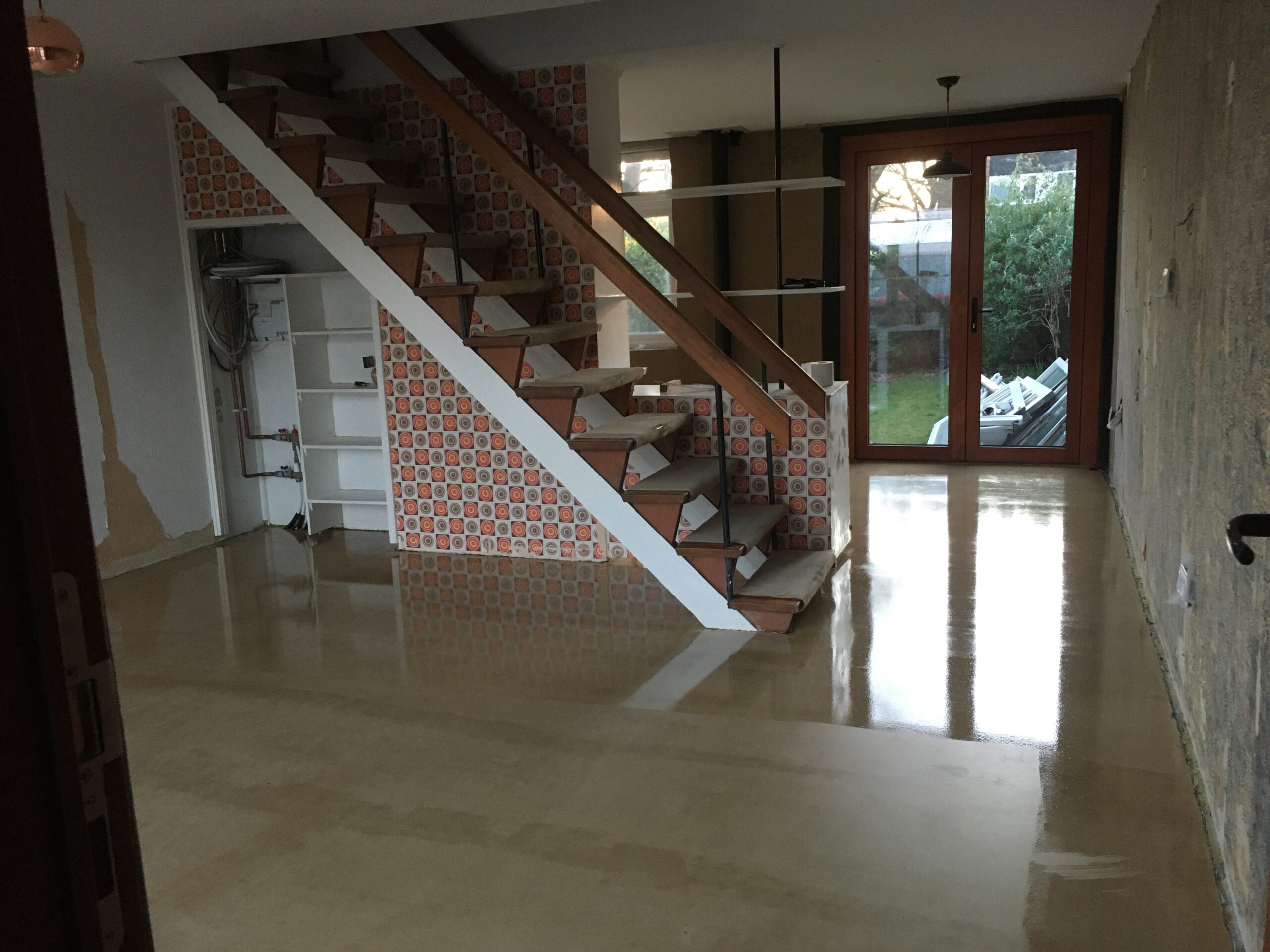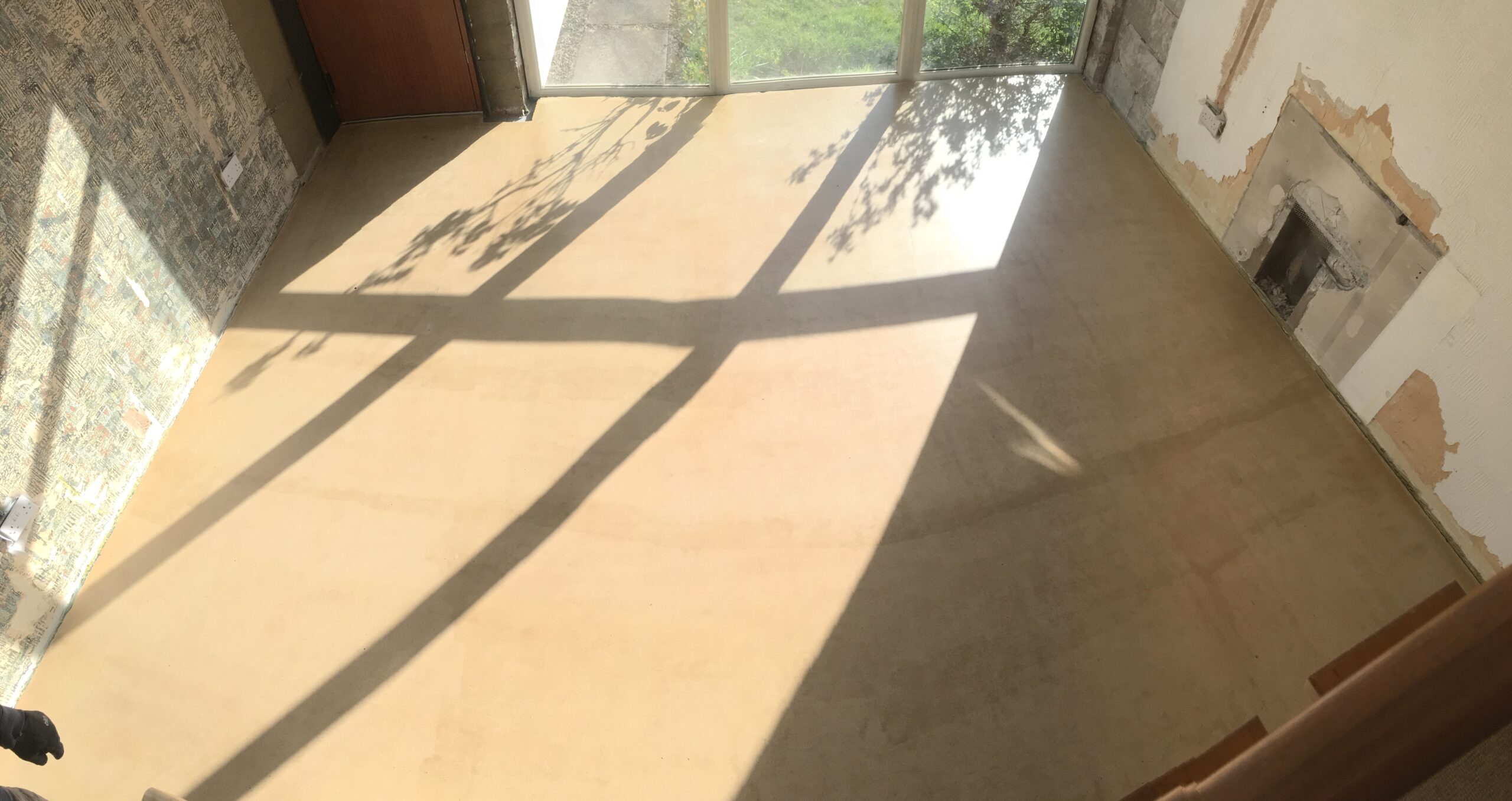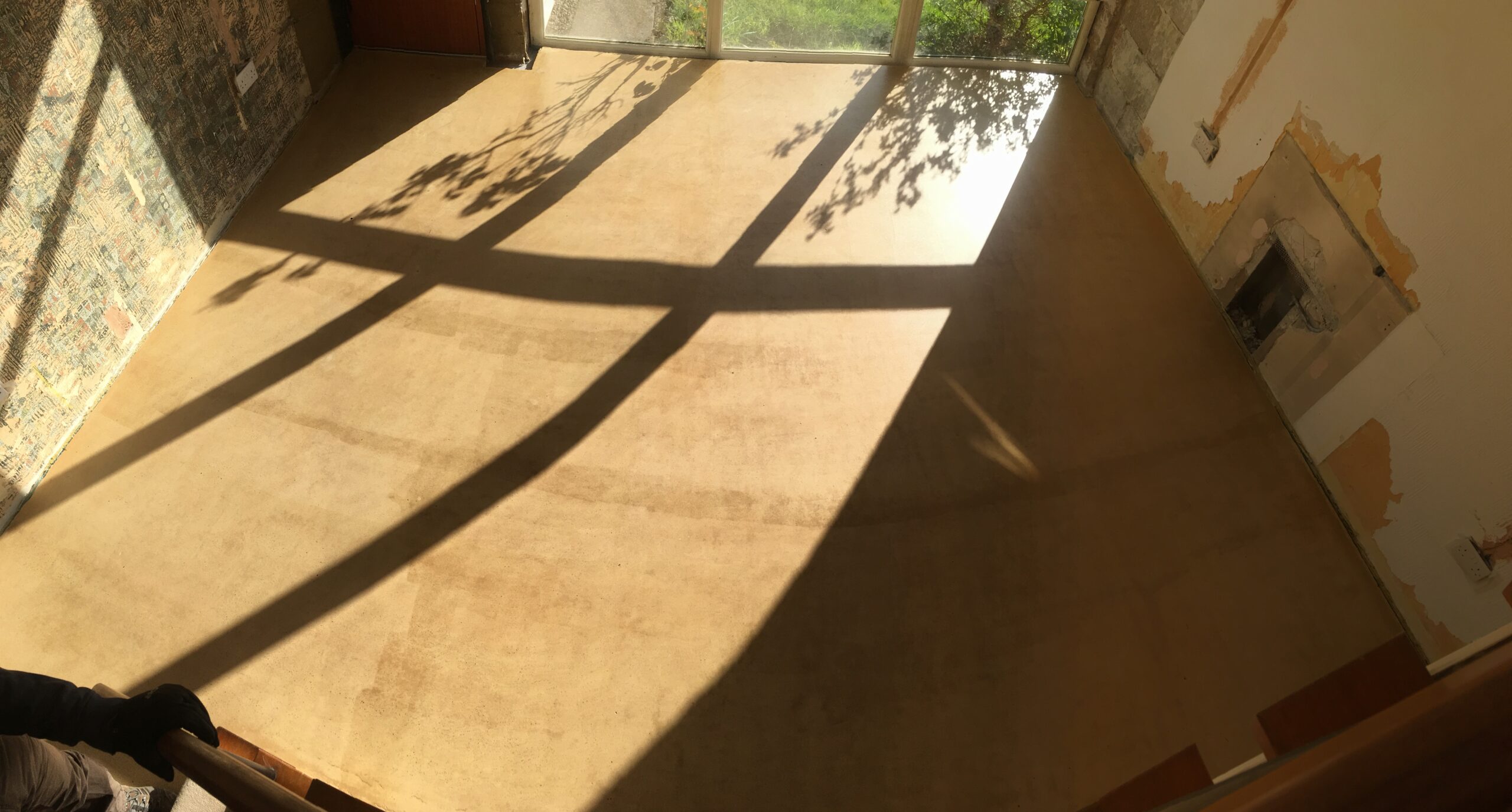
So the previous Floor Grind post described the difficulty, length of time and general frustration to grind the floor surface. It left off with a beautiful raw floor surface ready for a coat of resin to protect and finish it.
Well.
I had ordered the resin so it was on site ready to go. But it hadn’t arrived, so I chased it up.
I’ll try and give you a short version:
- “the product you wanted [Sikafloor 2540W] has been discontinued”
<Sigh>
- “the replacement [2510W] is not available in clear” just ~5 opaque, industrial colours of grey, yellow, orange.
Using an opaque colour would mean that grinding/sanding the floor was a complete waste of time.
- “there’s an alternative from a different manufacturer, Remmers”
- “oh, that’s not available in clear either”
- “how about this Remmers product?” Oh that’s just a primer, it’s not stable.
- in fact “it is impossible to create a UV stable epoxy resin, they will all yellow in sunlight and break down in time”
So long as we don’t have big windows then… oh wait. And patio doors.
- A supplier said, “Remmers agree with us that the specification [Gypsol Rustique] is wrong, and unsuitable for this use”
The Gypsol Rustique system was developed, used and marketed with case studies. It had been discontinued, but I liked the sound of it, so decided to follow it anyway, aware that it was no longer supported.
- Sika technical said “Yes, the replacement product [Sikafloor 2510W] IS available in clear. Suppliers just aren’t aware of this. Yes, it could turn yellow under UV.
- A supplier said: “Oh, OK. Let me check. OK, yes. We can get it, but it will take several weeks.”
We can’t wait several weeks.
So at this point I decided to give up on epoxy resin, and just use Osmo Oil instead.
This is not ideal. But we need to move on.
Osmo hard wax oil is my favourite product. We used it throughout the house in Hull, including the hall and lounge floorboards, and even in the high traffic areas it looked fabulous even a decade later.
Well it turns out they now do Osmo Concrete oil for stone-like materials.
It won’t provide the surface strength needed for anhydrite screed though (which resin would). So although the screed is incredibly hard in some ways, when we drop hard, sharp things on the floor, it is likely to chip.
Tests looked great:
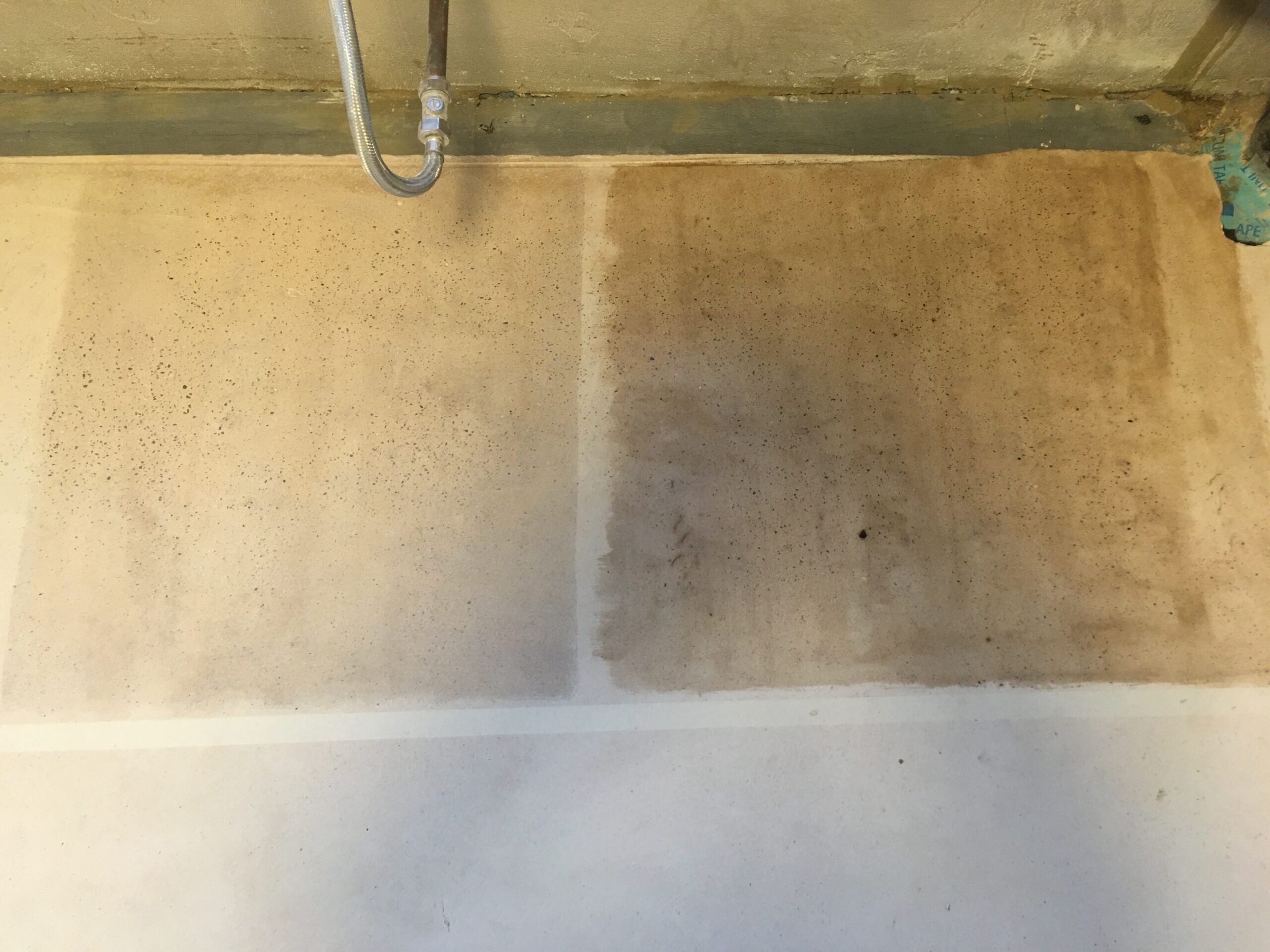
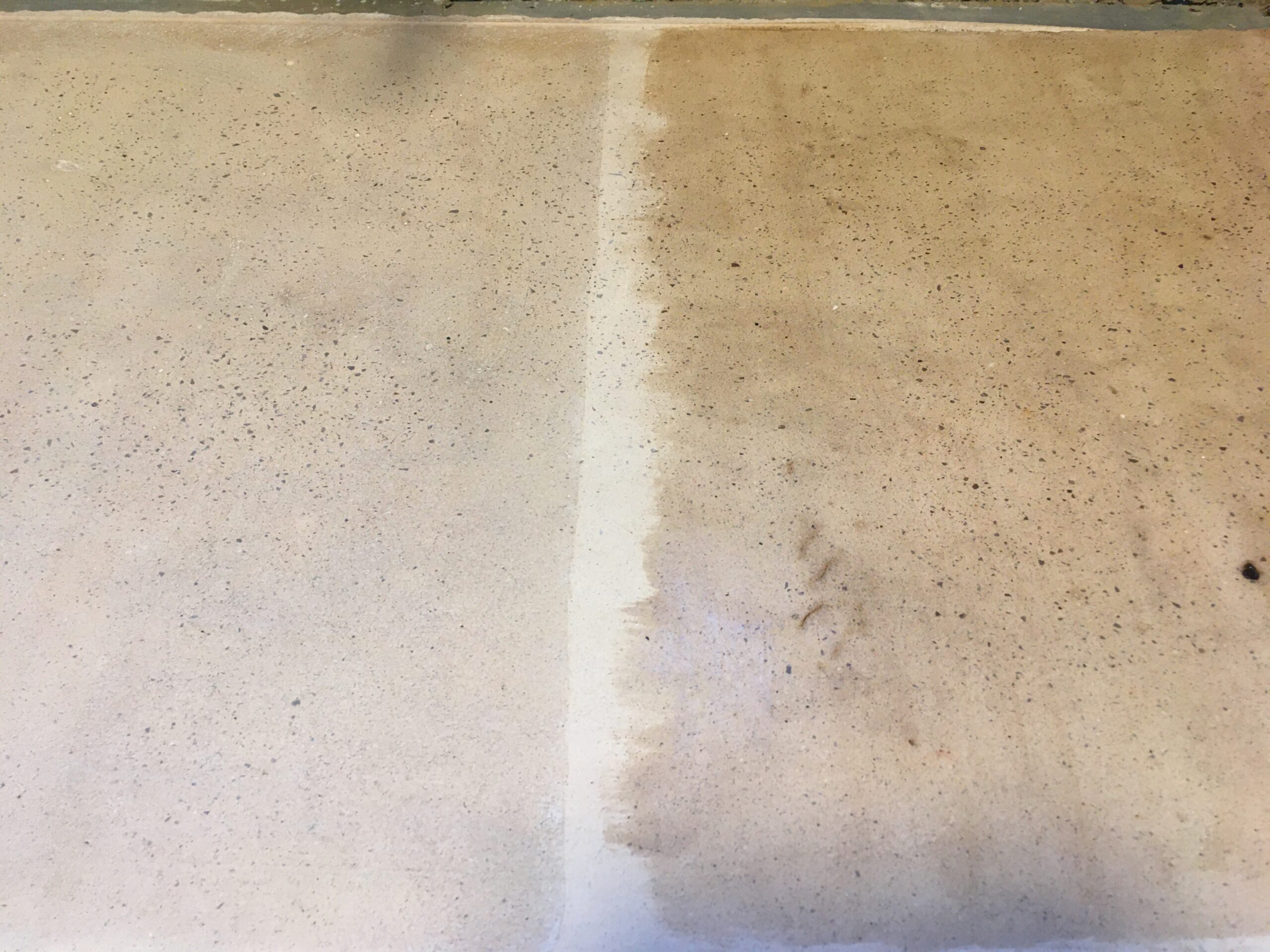
But when the first coat was applied it soaked it up like a sponge, so the colour is uneven, leaving obvious roller marks all over it.
It looks … OK, I guess. After so much effort I had hoped for a better outcome.
So we’ll live with it for a while. It scratches easily, I’ve already discovered. So if it looks rubbish in a couple of years, we’ll put a floor covering over it then.