Big differences over conventional (plastic) insulation include that it’s natural, biodegradeable, less nasty chemicals, and crucuially in use: breathable.
It’s also heavier. Quite a lot heavier. So it has thermal mass. This is another advantage in use. It’s also far better at keeping out heat on hot days. We noticed this in the 40˚ heat wave in Hull, when our house remained comfortable. Although plastic insulation is more insulating (about twice as insulating, at half the cost) wood fibre changes temperature more slowly, so is far better at keeping out the midday sun heat peaks. [Explanation here.]
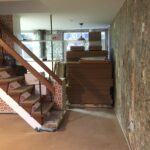
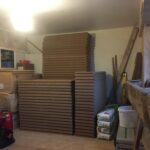
But it does mean that moving it around is a heckofalot more work. e.g. getting it inside before it rains (it’s the North West in January), and then upstairs so the ground floor can continue drying.
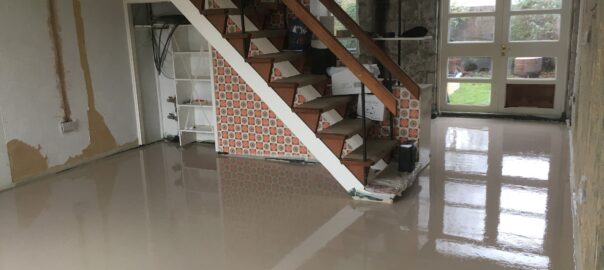
After weeks of research, enquiries, estimates, contradictory information, a few delays and a last hour product switch we mark a major milestone – a new floor poured throughout the ground floor.
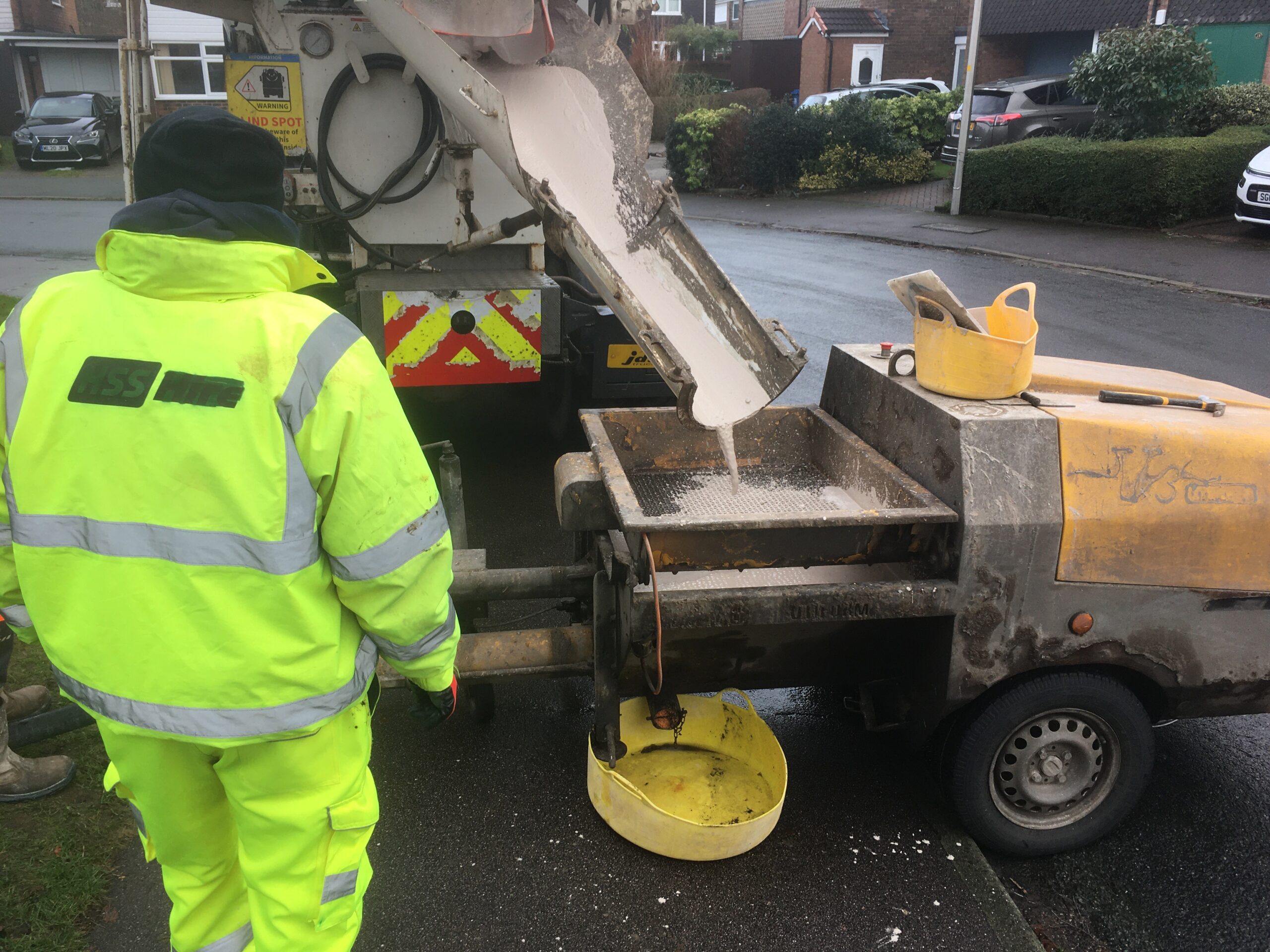
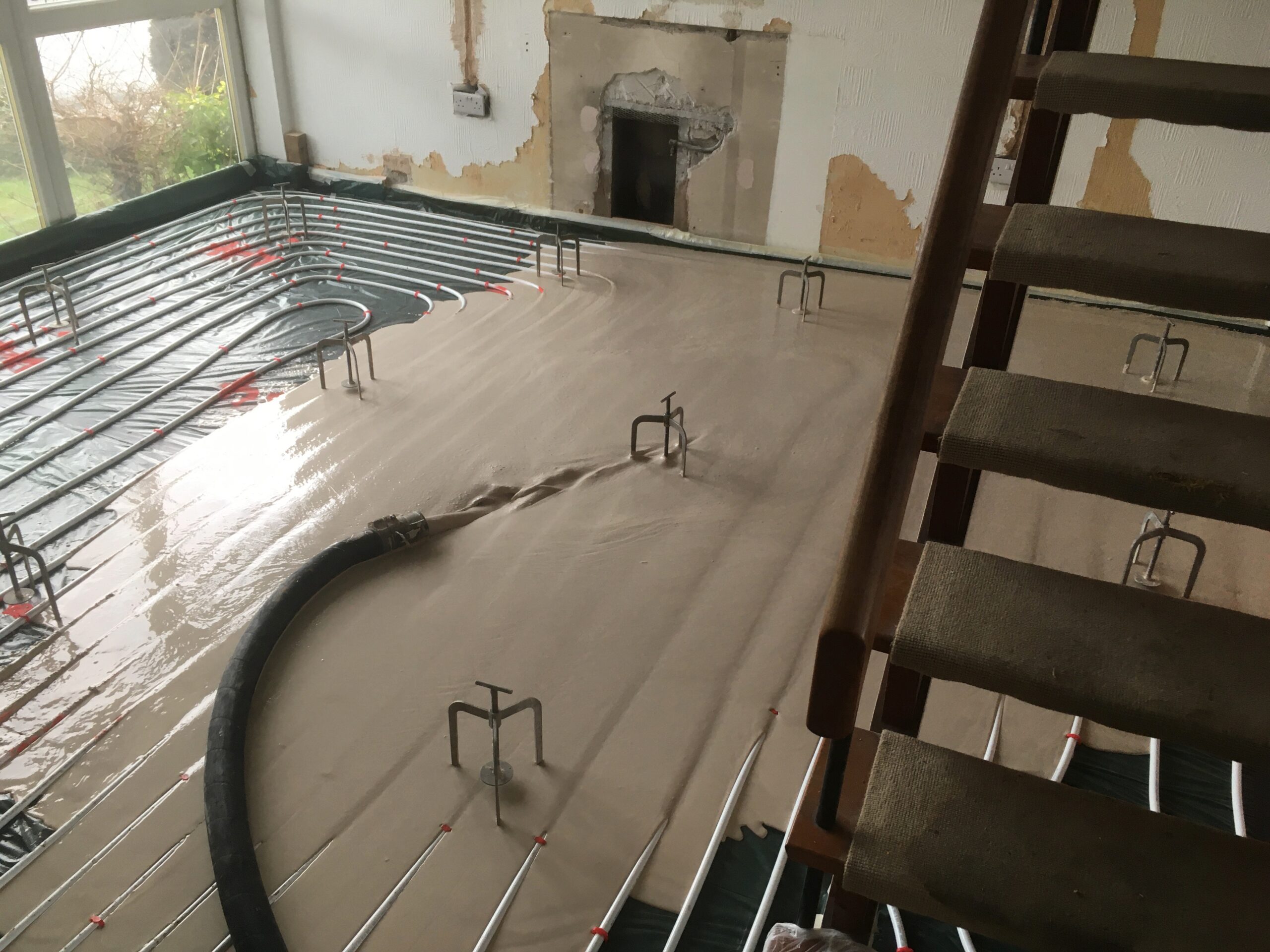
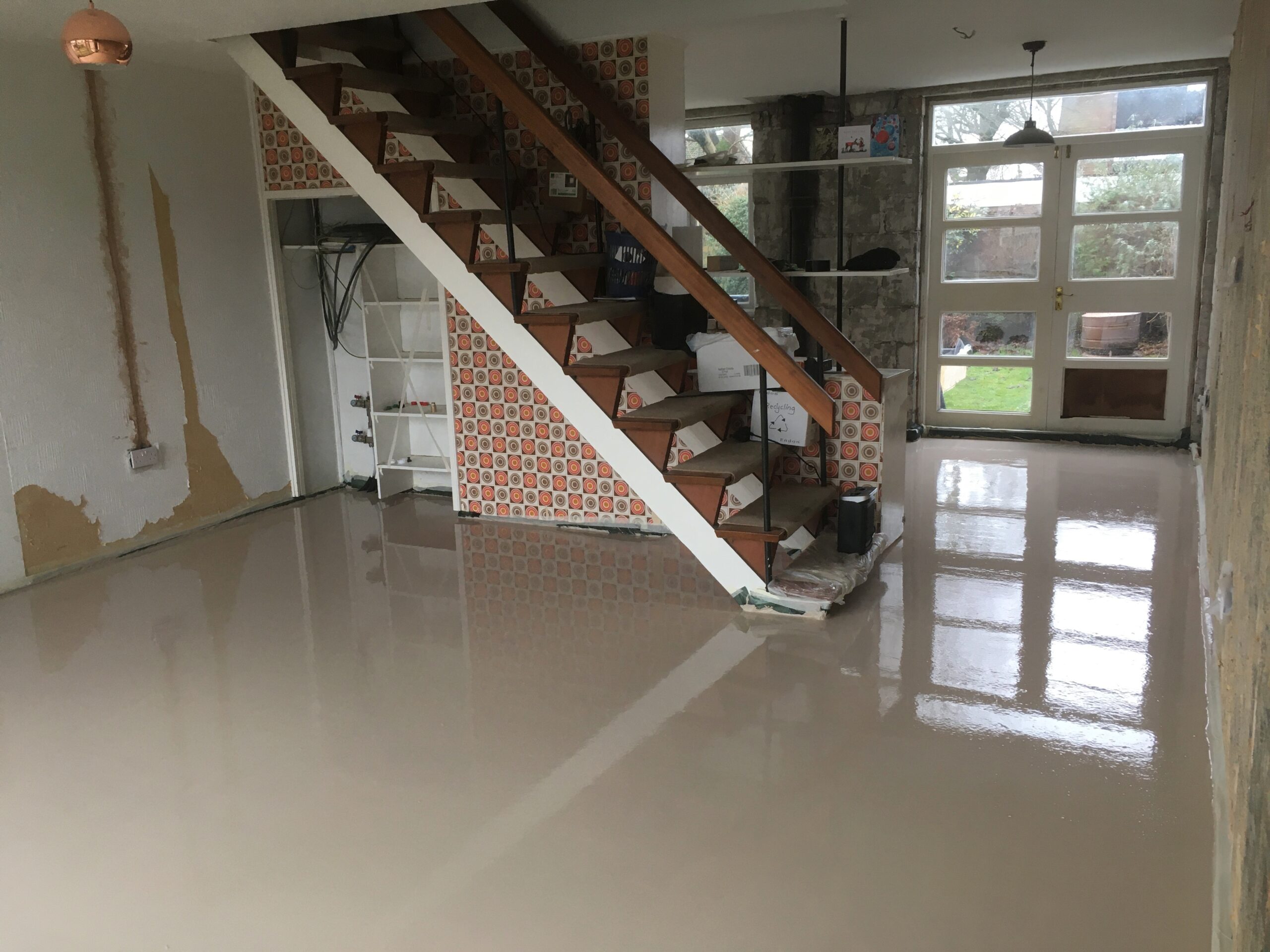
It’s a Gypsol liquid screed.
No, I hadn’t heard of it either, before all this. Here’s what I learnt.
It’s an anhydrite flowing screed. It’s cement free. Instead, it recycles a by-product from acid manufacturing as the binder. It’s strong enough that it can be much thinner than a concrete floor (35mm rather than around 90mm) which matters for us because of the low ceiling height, and leaves room for a bit more insulation underneath.
This product is Gypsol HTC (High Thermal Conductivity) optimised for underfloor heating. So when we connect a heat pump to it, the system will function effectively (reasonable reaction times) and efficiently – so use less energy, and a higher proportion of renewable energy.
Cement production is really carbon intensive. But this isn’t, and because we need only a third of the amount than concrete, the emissions are a fraction of a concrete floor (80-90% less).
It will be our finished floor surface, after sanding, & coating with an epoxy resin (solvent free). The colour can’t be guaranteed as it can depend on the sand at the mixing plant on the day, so we’re really pleased it’s more of the hoped for light sandy shade, than a grim grey.
The red spot markings are the required depths to achieve a flat, level surface, determined in advance by a laser survey.
The tripods are depth markers, adjusted for each spot.
The red spot markings are the required depths to achieve a flat, level surface, determined in advance by a laser survey.
The tripods are depth markers, adjusted for each spot.
We can walk on it in a couple of days, and sand it in a week. Full drying out takes about 1mm a day, so weeks. And we don’t yet have a heating system to help it along, unfortunately. So I’ll borrow an industrial dehumidifier. In a month I can coat it, for a finished floor surface protection. In the mean time… wall insulation.
Welcome to the blog for Inglehome II – Heaton Norris.
This is really just a photo diary for family & friends.
You might like to read it in chronological order, which might make more sense, in which case you can start at the oldest post, by scrolling right down to the beginning, or:
Under Floor Heating works really well with an air source heat pump. Heat pumps work more efficiently when not working too hard, so work best with low temperature heating systems. In a well insulated building a well designed heat pump system can heat the house to a healthy, comfortable temperature with a nice low flow temperature. So the heat emitters (in this case underfloor heating downstairs, and radiators upstairs) stay gently warm all the time, keeping the house warm, whilst the heat pump utilises more renewable energy (heat from the outside air) so not consuming too much electricity.
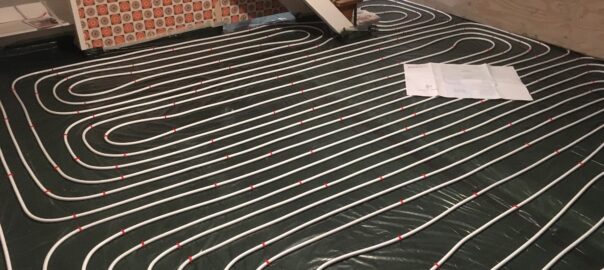
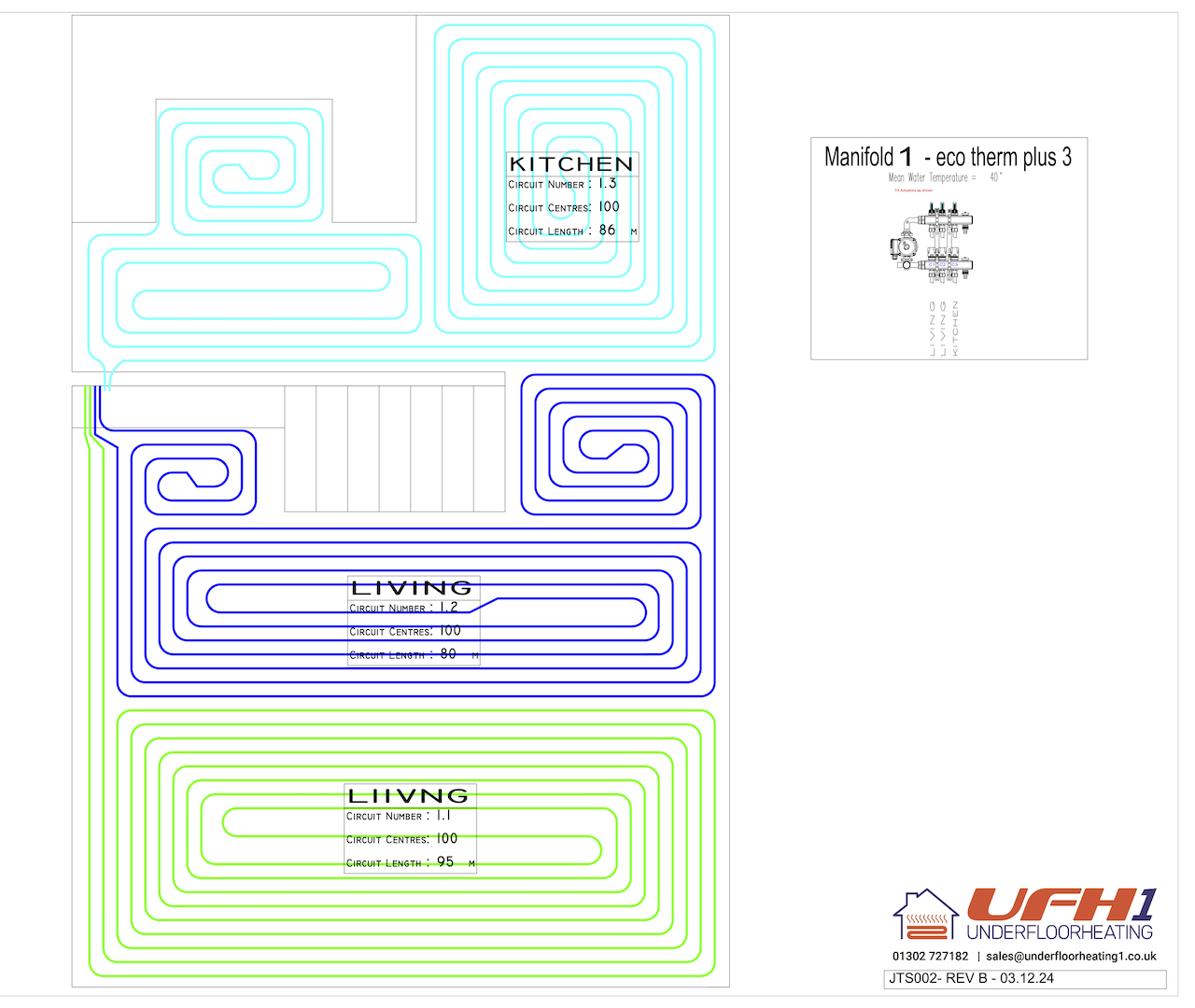
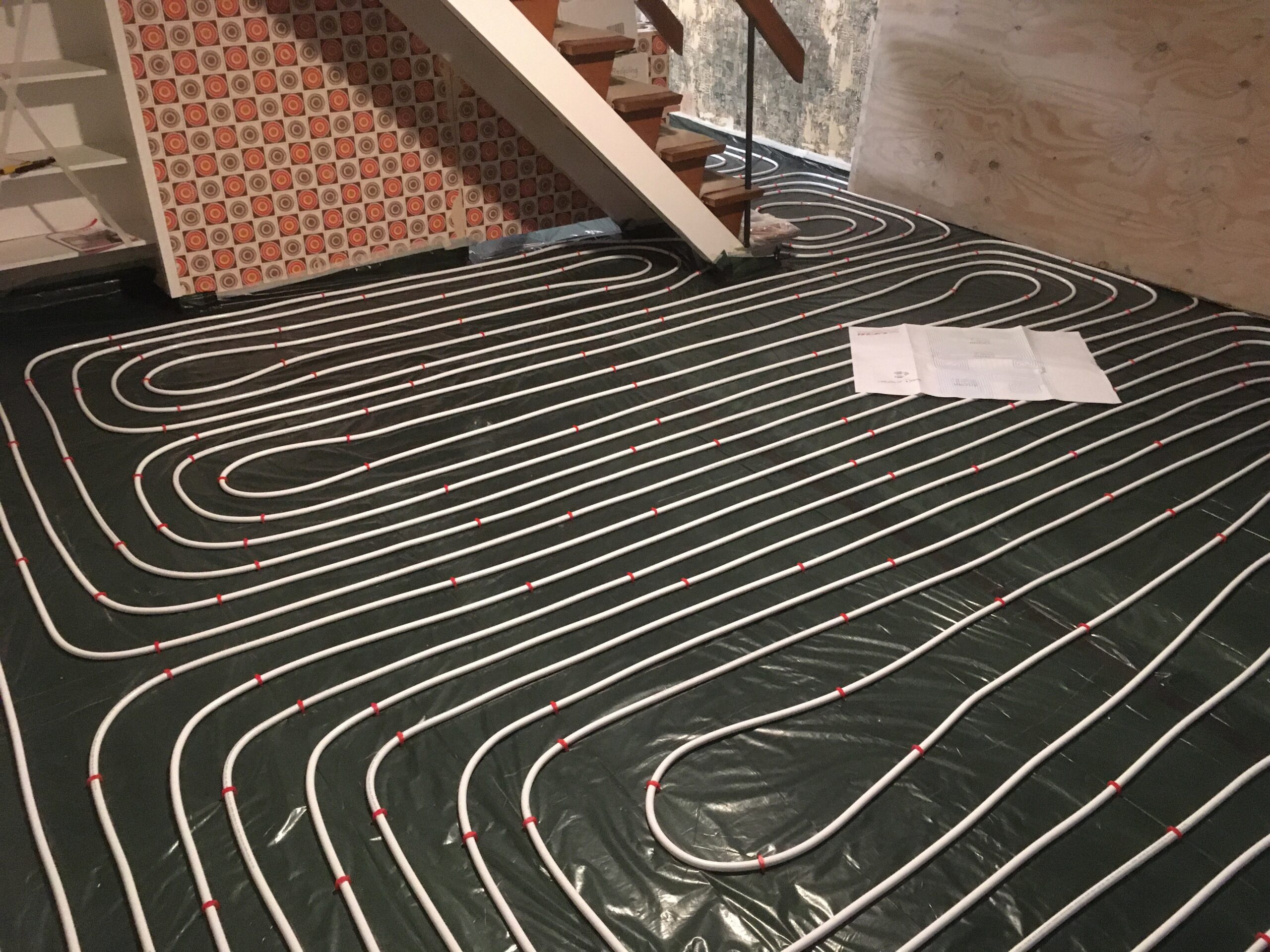
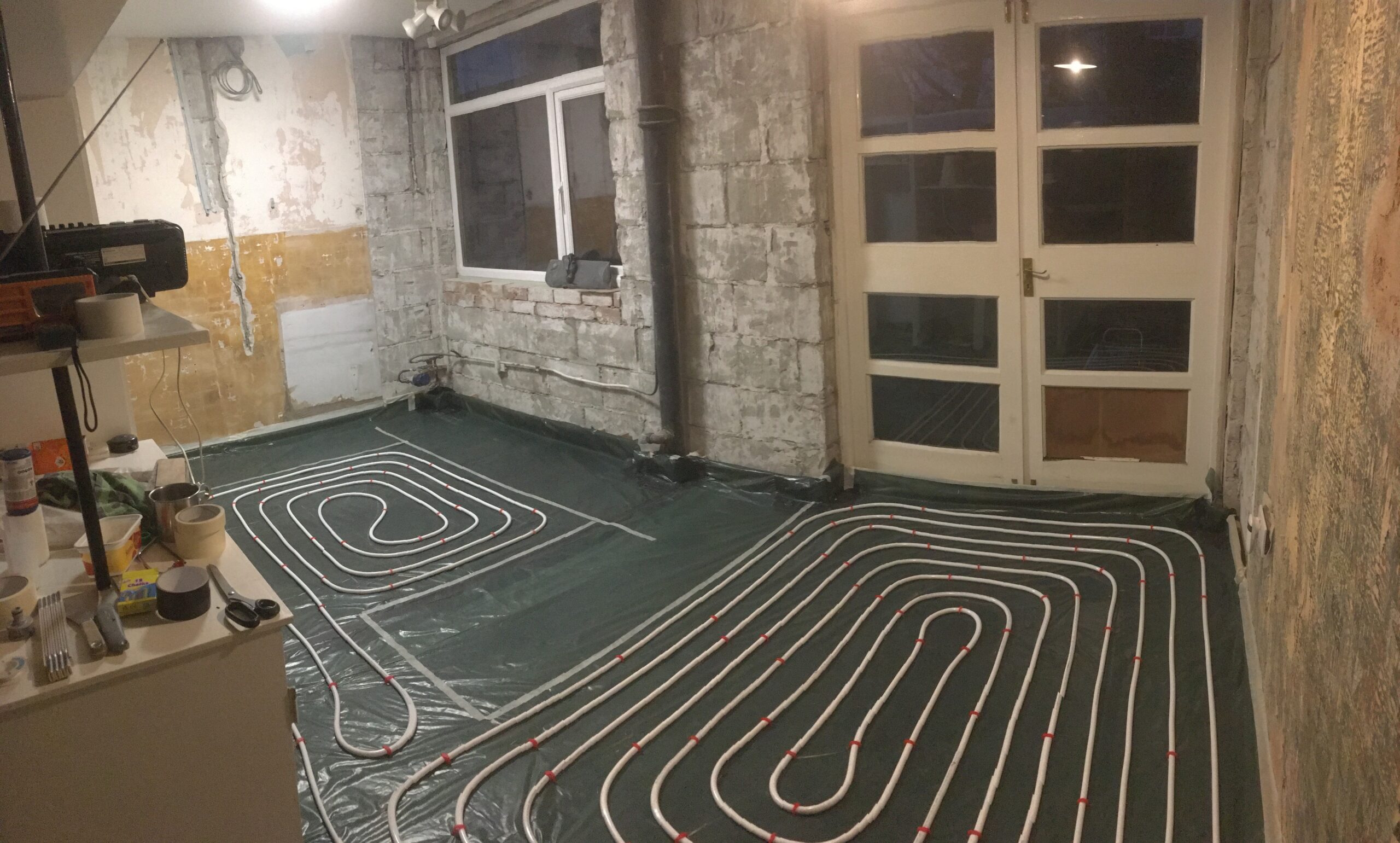
All we need to do is install a pipe that looks like this:
Groovy.
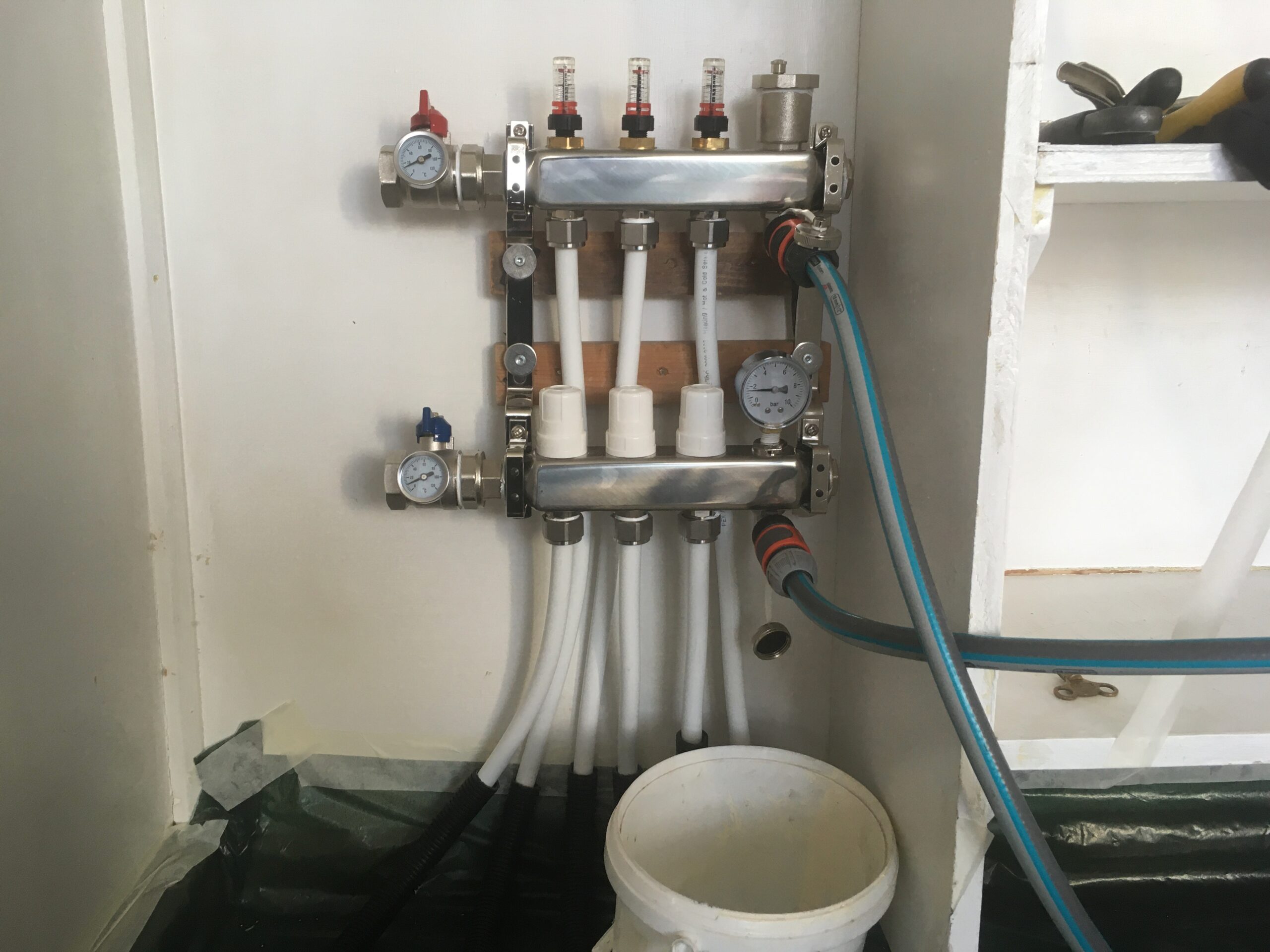
Filling with hose pipes & pressurisation with mains water.
Polythene sheet (damp proof membrane) installed and sealed all round the edge.
Then 40mm of floor insulation. I’d prefer more, but the low ceiling height is getting lower with every layer I add to the floor. The other option would be break up the existing concrete floor and excavate down, and then install lots of more eco insulation and a new floor. Sorry, but no.
It’s XPS – eXtruded PolyStyrene. XPS is stronger than EPS (expanded polystyrene) so good for floors. We previously used EPS for EWI. This product is also grey, as it’s treated to be reflective and so even more insulating, to get more benefit in the limited thickness. The insulation really matters here, because the floor will be heated, and there may not be any insulation at all between the existing concrete floor and the earth.
The house is cross-built construction. Meaning the cross walls running front to back (the gable end, and the partition wall with next door) are the main, load bearing walls. In this case they’re twin brick or block walls with a cavity between. The front and rear walls are more lightweight construction – windows & panel, or clad with tiles and timber.
After the 2nd World War various new construction methods were tried in order to save on materials. There are some houses of rather unconventional construction around Manchester, including a couple we didn’t buy that turned out to be rare examples of a steel frame construction, and most wierdly, diatomite. Cross-built is fairly common though.
So, I had assumed the front and rear walls would be timber frame, with the cladding attached on the outside, and plaster board on the inside.
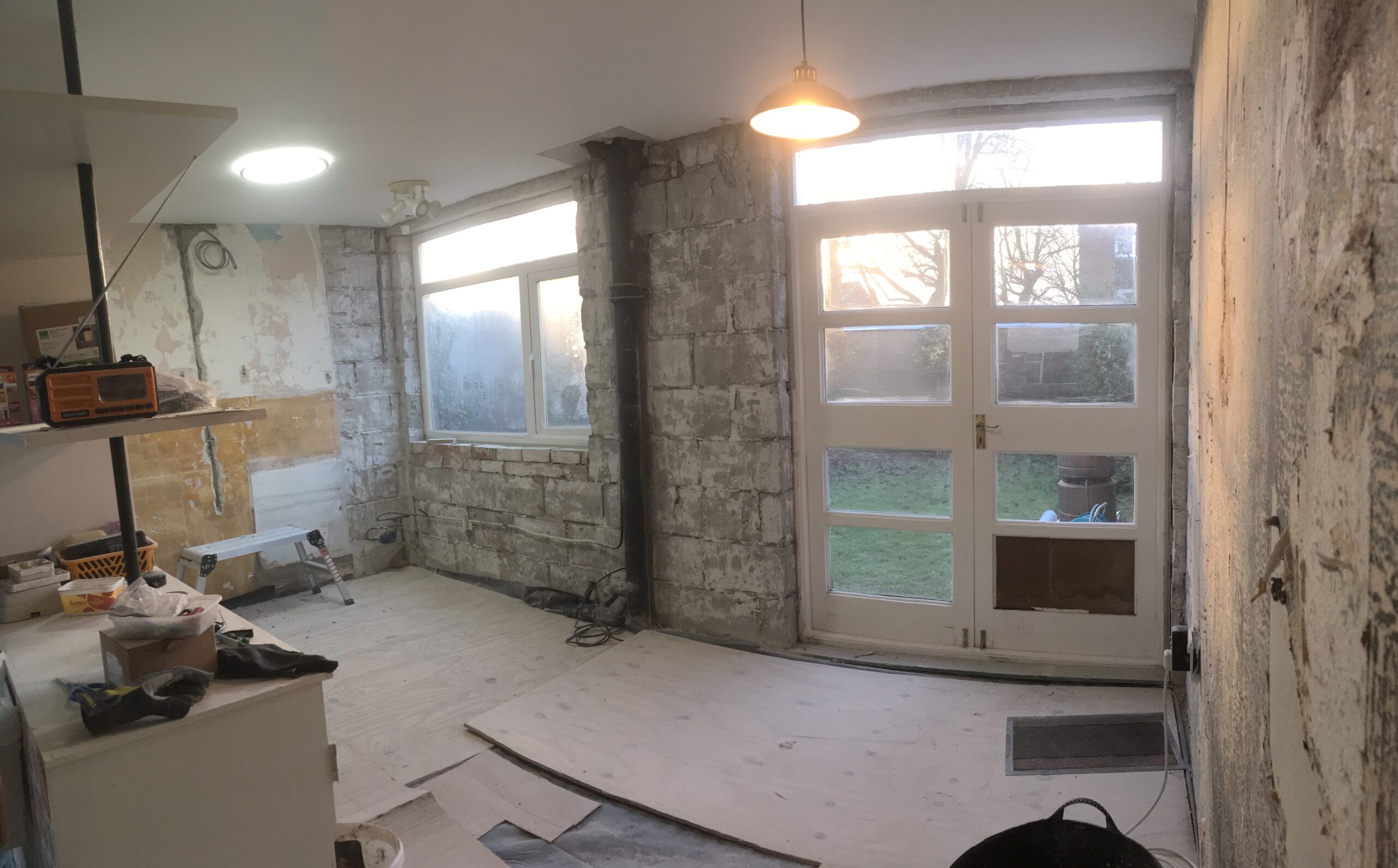
But we (myself and a couple of surveyors) were pretty surprised to discover masonory in the front and rear walls, even upstairs.
We’ll add insulation to all the walls. Front & rear I’m going insulate internally with woodfibre boards.
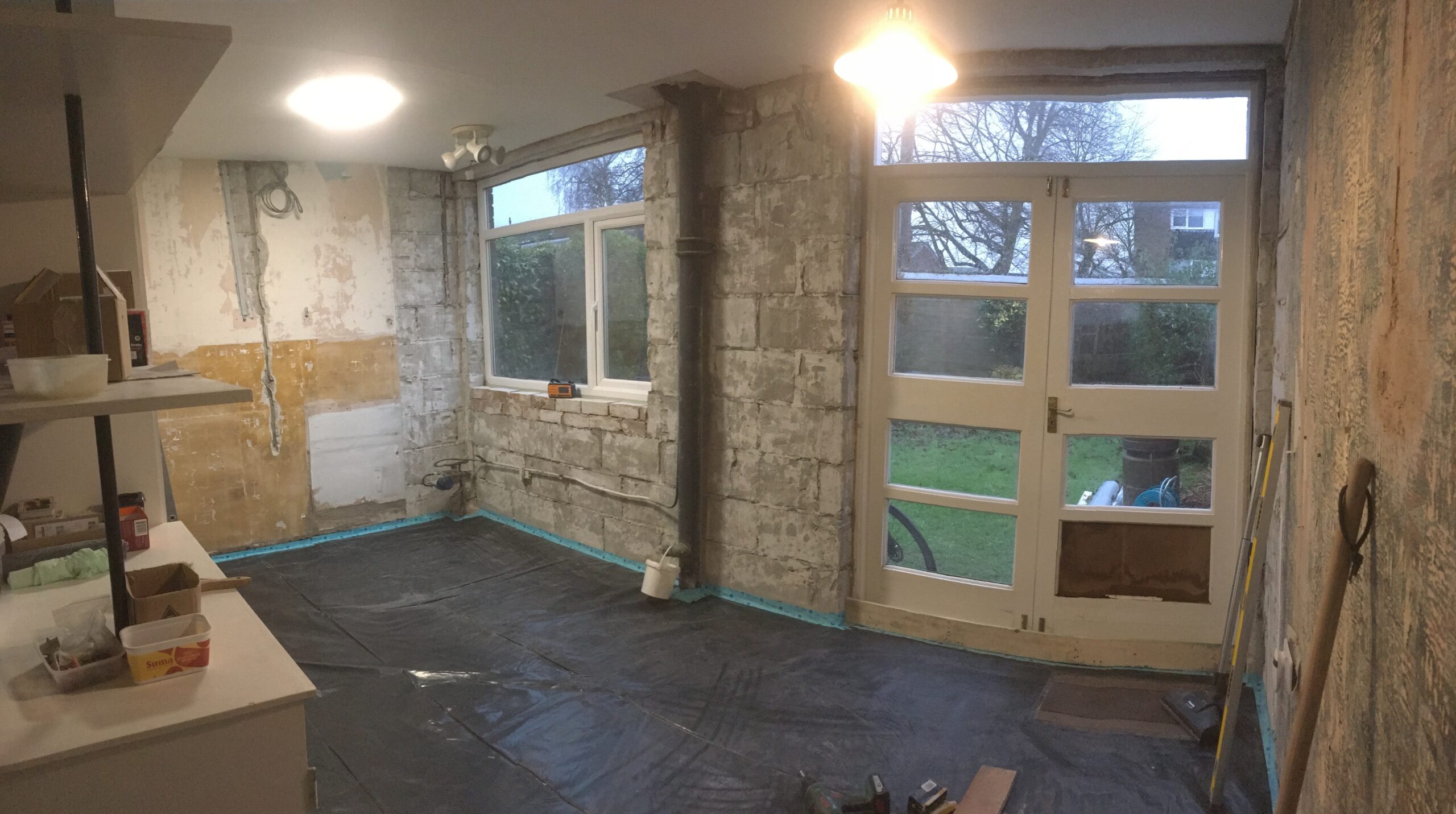
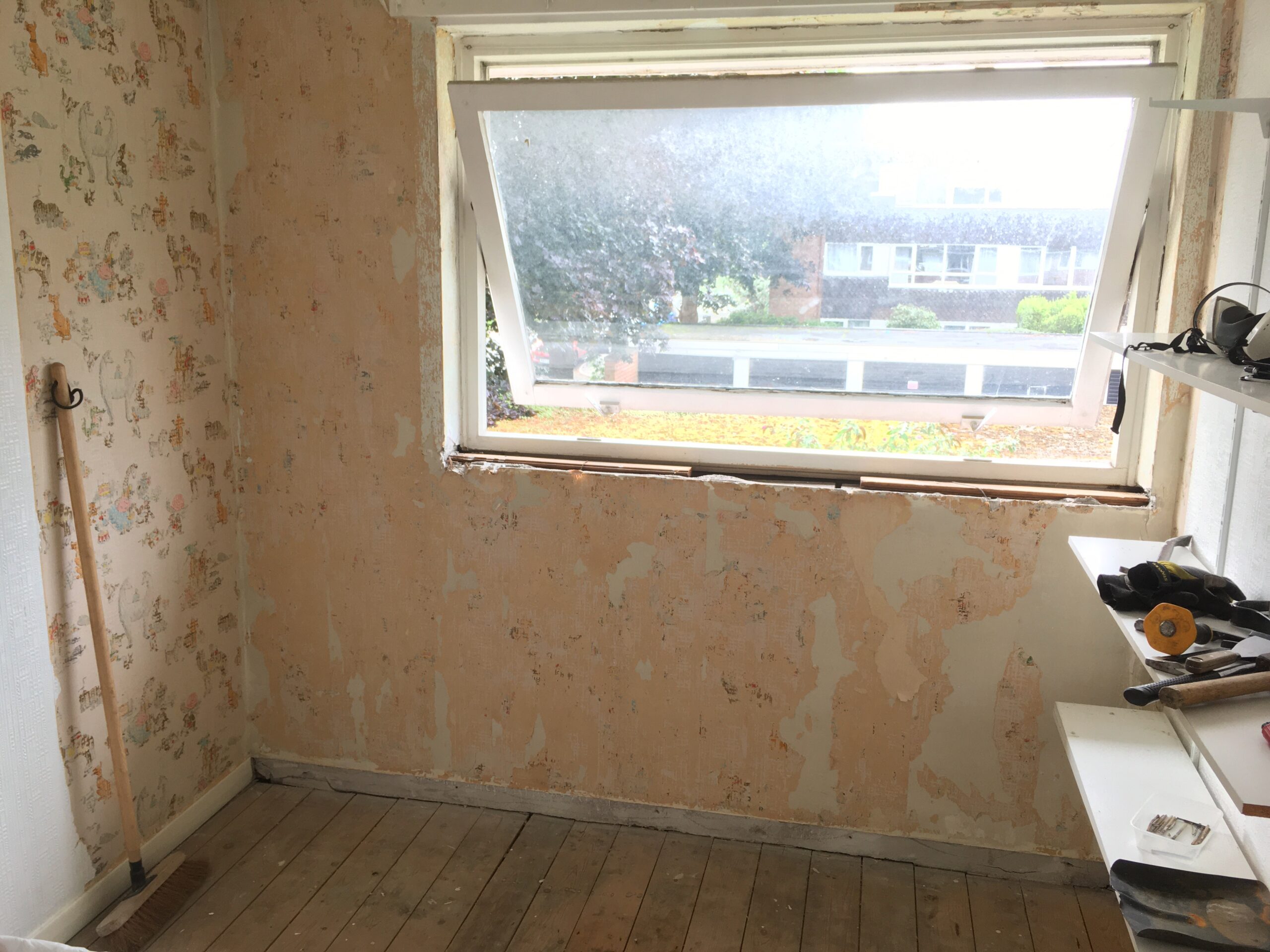
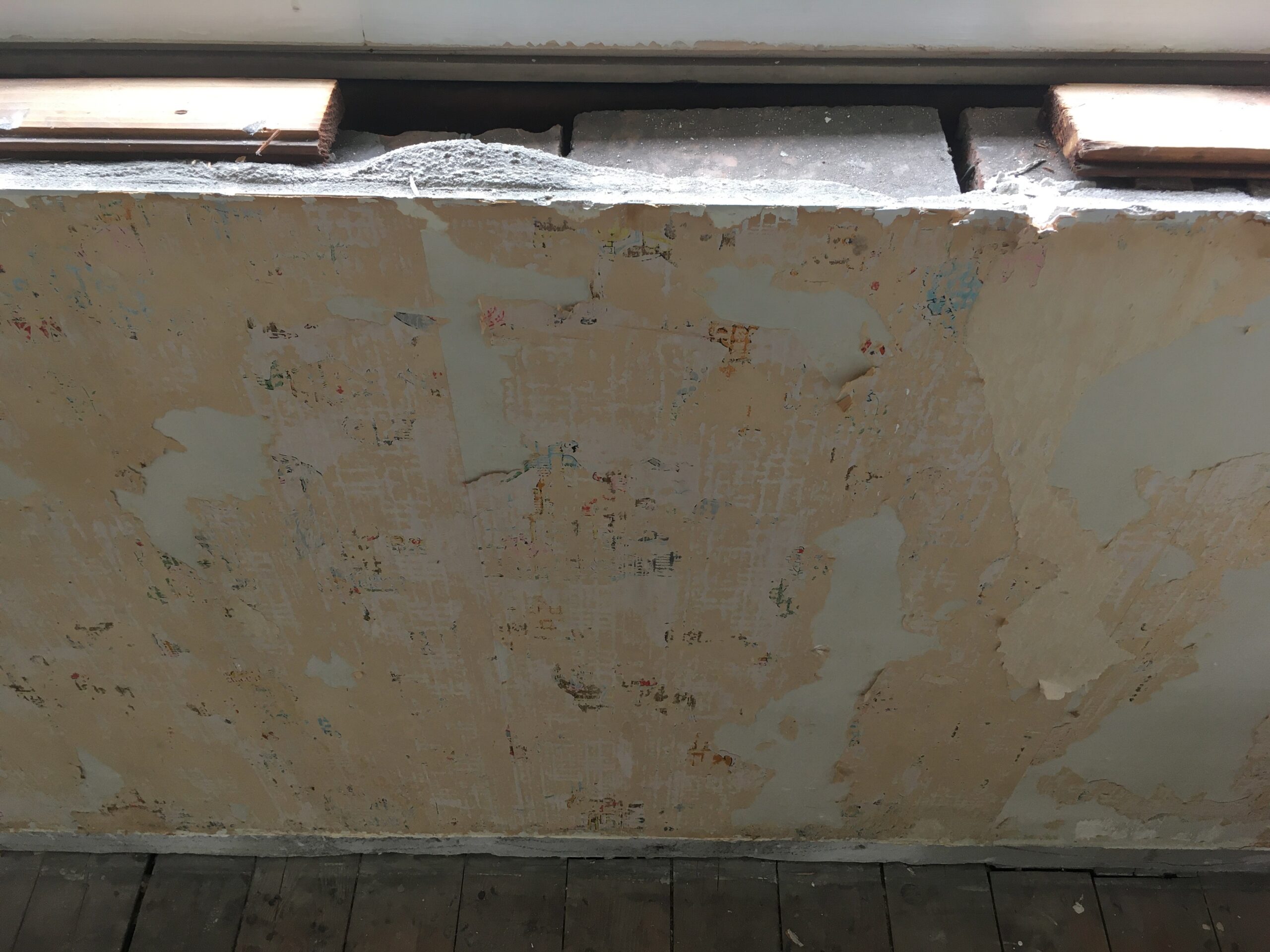
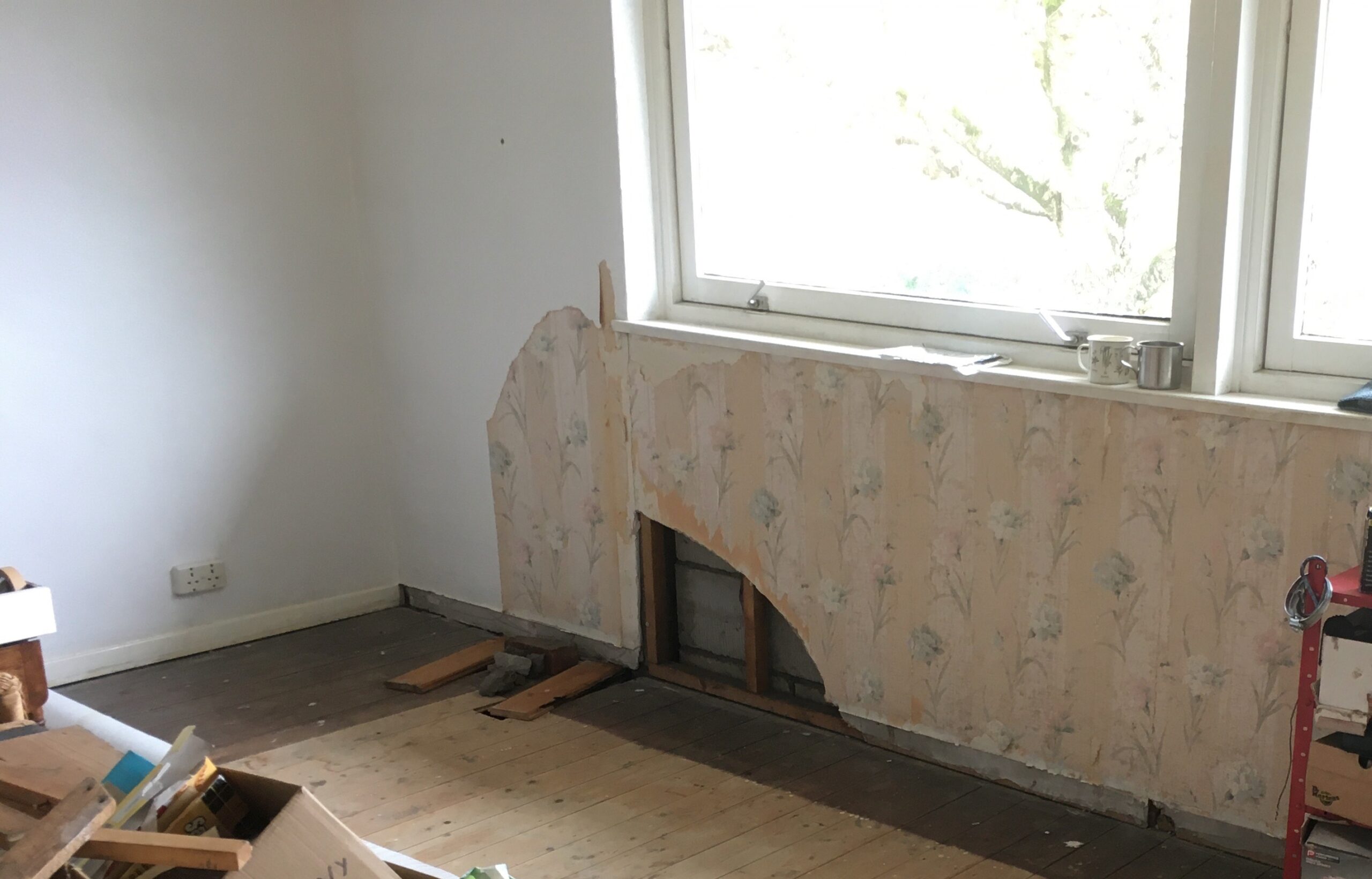
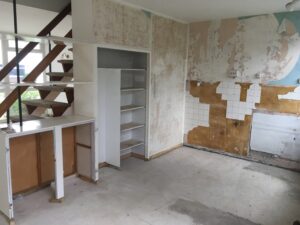
In preparation for internal wall insulation, we’re removing the existing plaster, taking the walls back to brick or block.
Surprising…
… bricks inside.
And here at the front, blocks.
Also related to construction, we’re planning new windows, including the very wide front upstairs windows. In the case of some neighbours the window fitters have simply removed the centre mullion.
But when I checked, I discovered this post continues above the window, so may well be providing structural support to a long lintel above, and possibly part of the roof. I ran it past a mate who is rather conveniently a structural engineer. He does not advocate its removal.
What no mullion?
Providing support?
So on reflection, I think I might leave it in place. We’ll have new windows fitted either side of it, and I’ll insulate the post.
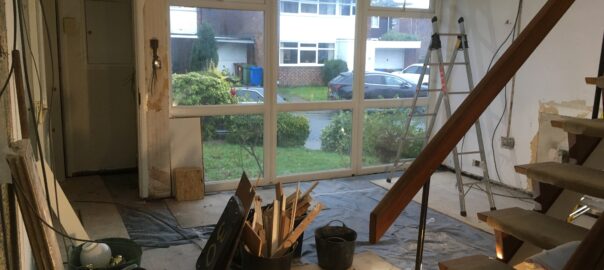
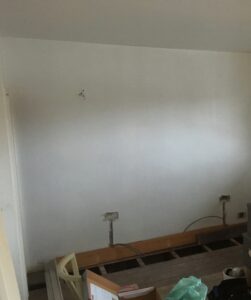
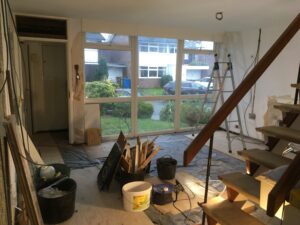
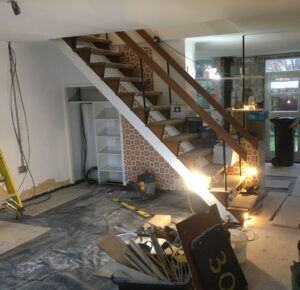
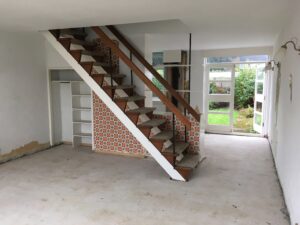
With floorboards lifted, holes and channels all over the walls, and wires sticking out all over the place, the place looks like a proper building site now.
It’s all fine. It’s OK. We just have to break it down a bit before we can build it back up, better. In this case, with lights where we actually want them, more than one socket in a room, and circuits for new efficient appliances and renewables kit. Oh, and an electrics board with trip switches, rather than a fuse box with actual fuses.
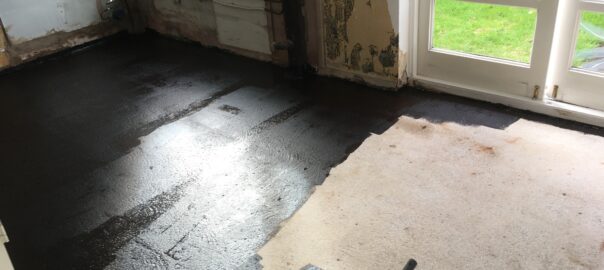
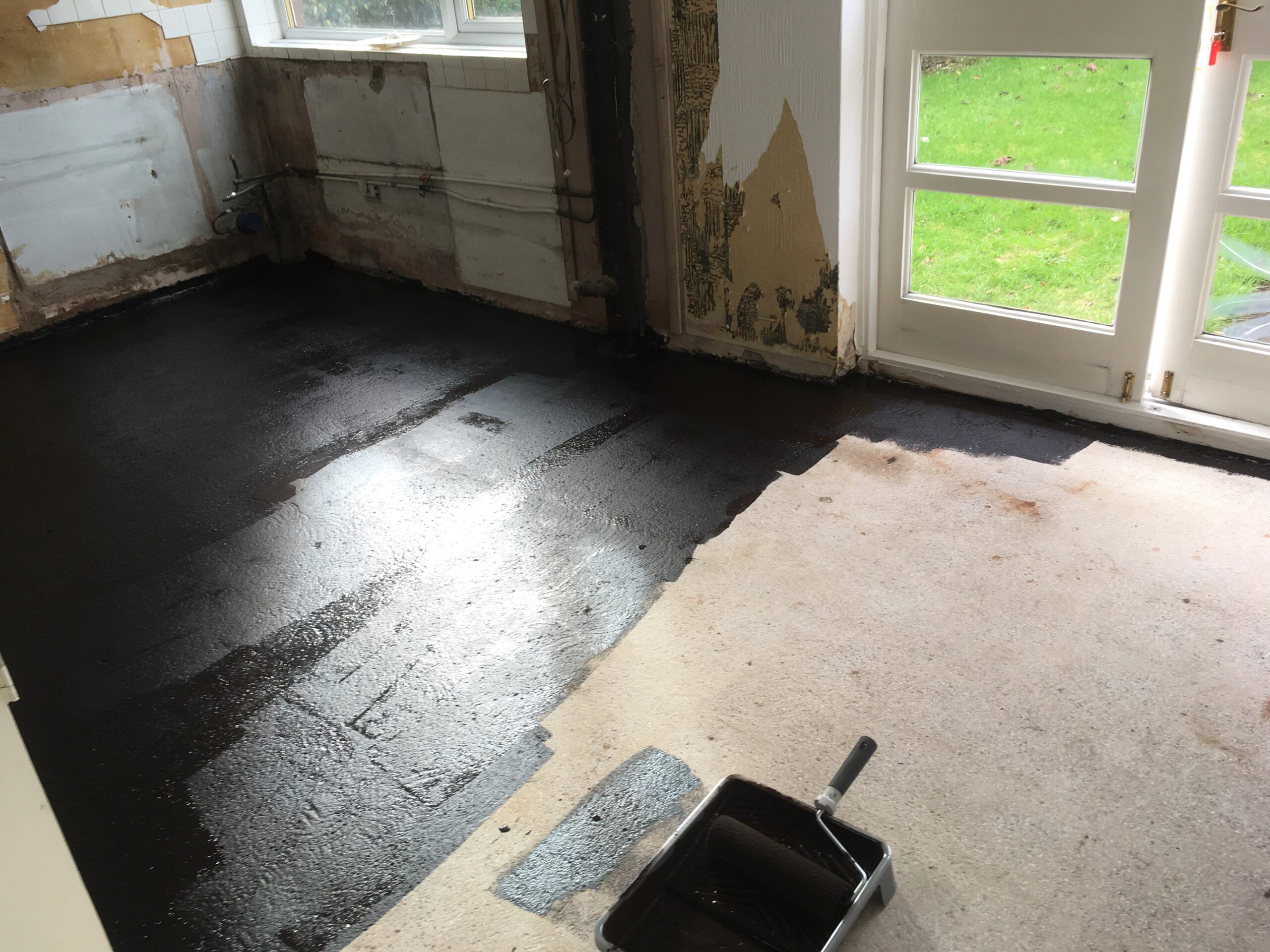
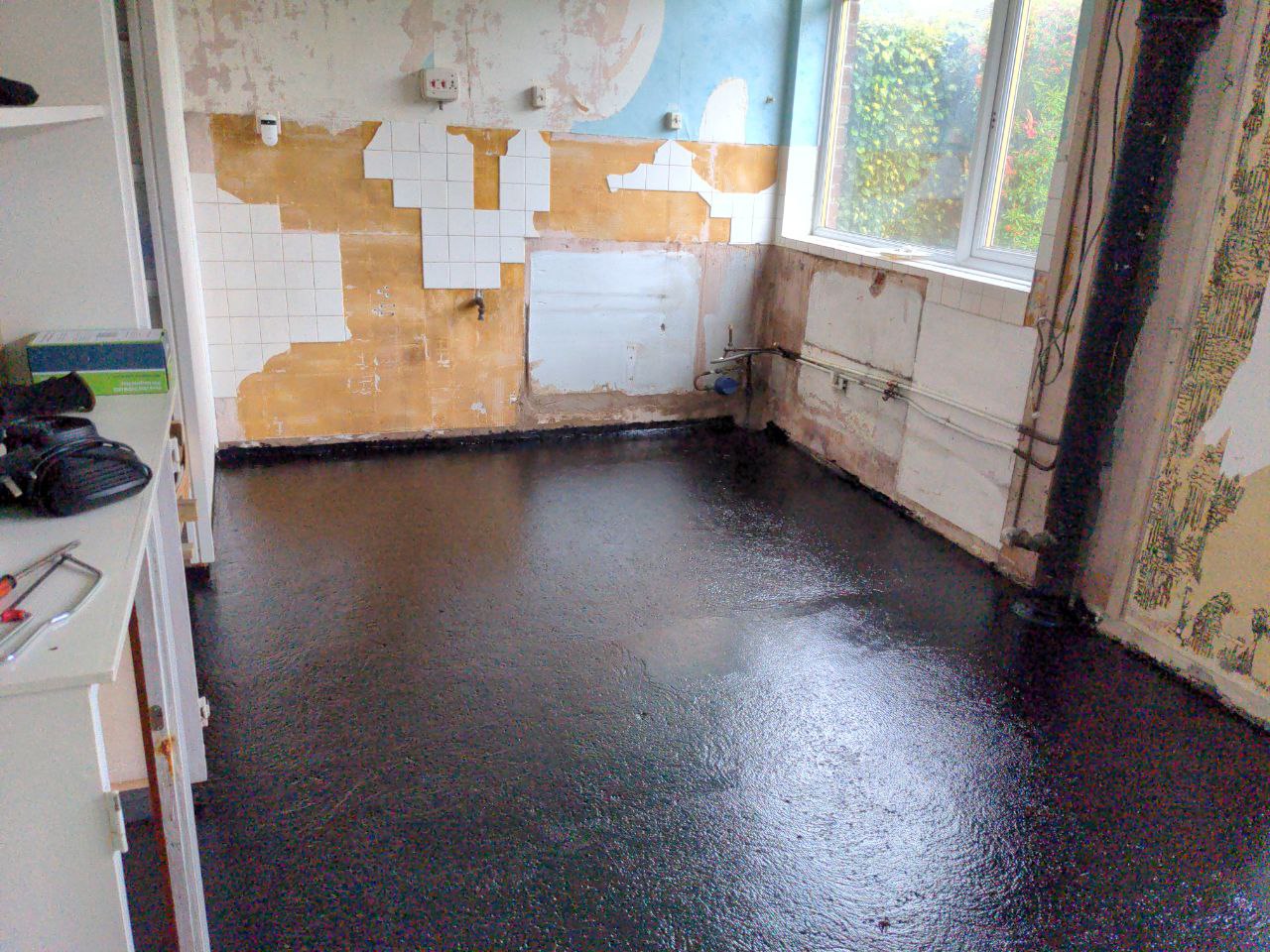
In preparing to install a new floor over the existing concrete we must ensure protection from rising damp with a damp proof membrane. I tried Black Jack DMP paint, a couple of coats. A great idea, to make a neat and thin, sealed surface and edging.
It did not dry. Even after a couple of weeks, well ventilated, and the weather wasn’t that cold.
Put anything down on it (i.e. anywhere on the entire ground floor of the house) and it gets tar like rubber paint stuck to it, which will not clean off, even with clean spirit. When you pick the thing up, the painted floor surface is left marked, damaging the damp proof seal.
When you walk on it, same thing. Paint stuck to your boots, which then sticks to whatever floor you walk on next, staining that.
Nightmare.
In the end I had to put down a plastic sheet dpm anyway to cover the sticky paint, and some very large wooden boards, to cover the floor, so we could crack on with a rewire.
A specialist asbestos removal company removed the floor tiles and then ground off the adhesive, along with a surface layer of concrete.
In order to allow the grinding machines to get close to the edge, and inside built in cupboards, I removed all skirting boards and cut the bottom off all the joinery. This would need doing anyway before installation of a new floor, so it made sense to do it now.
Looks good, all done and dusted. Or is it?
Oh no; they’ve left piles of concrete grains, dust, and tile fragments around the edge, where the grinding machine’s extraction couldn’t reach. <Sigh>. Well, I’ll suit up and do that myself then.